Langevin Sampling in Diffuion models
This youtuber only uploaded 3 videos and one of them explained score matching better than any others and finally I am ready to read Dr Yang Song’s paper and blog
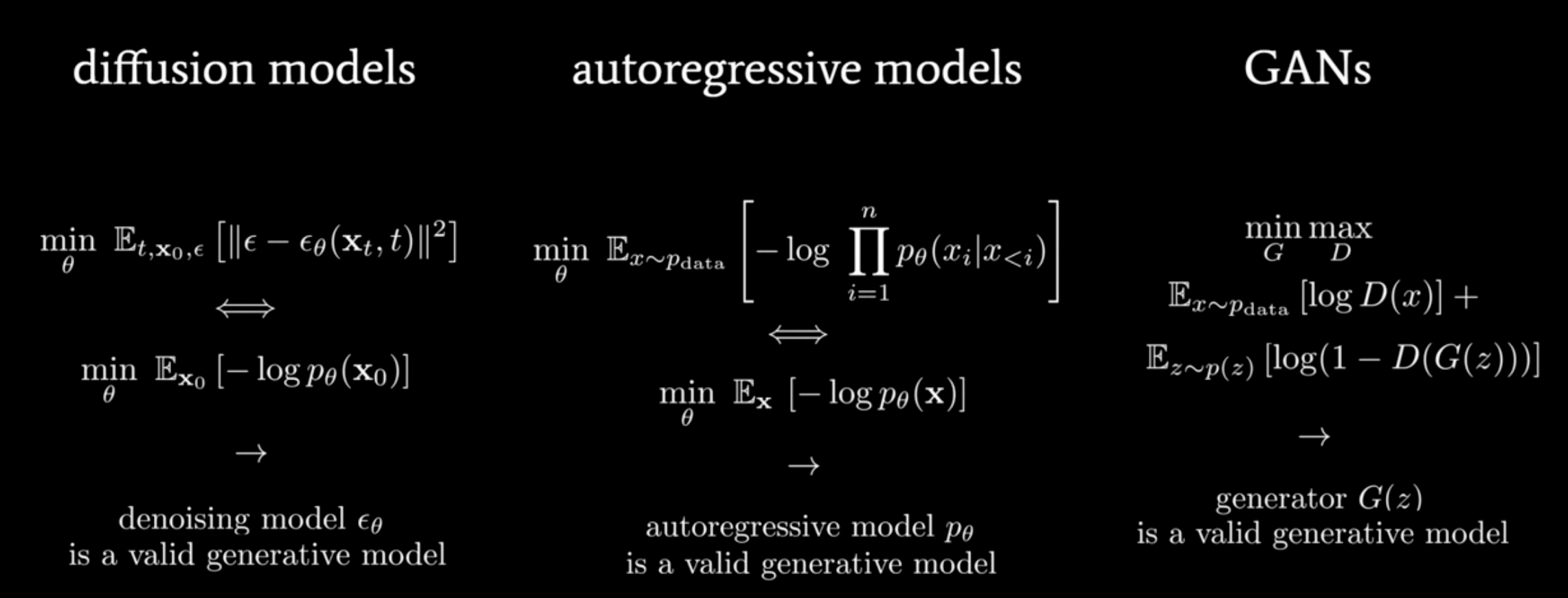
0 Model Classifications
- Likelihood-based models, which directly learn the distribution’s PDF via (approximate) maximum likelihood., like AR, VAEs, EBMs and normalizing flow models
- Implicit generative models, where the probability distribution is implicitly represented by a model of its sampling process, like GAN
1 Langevin Sampling
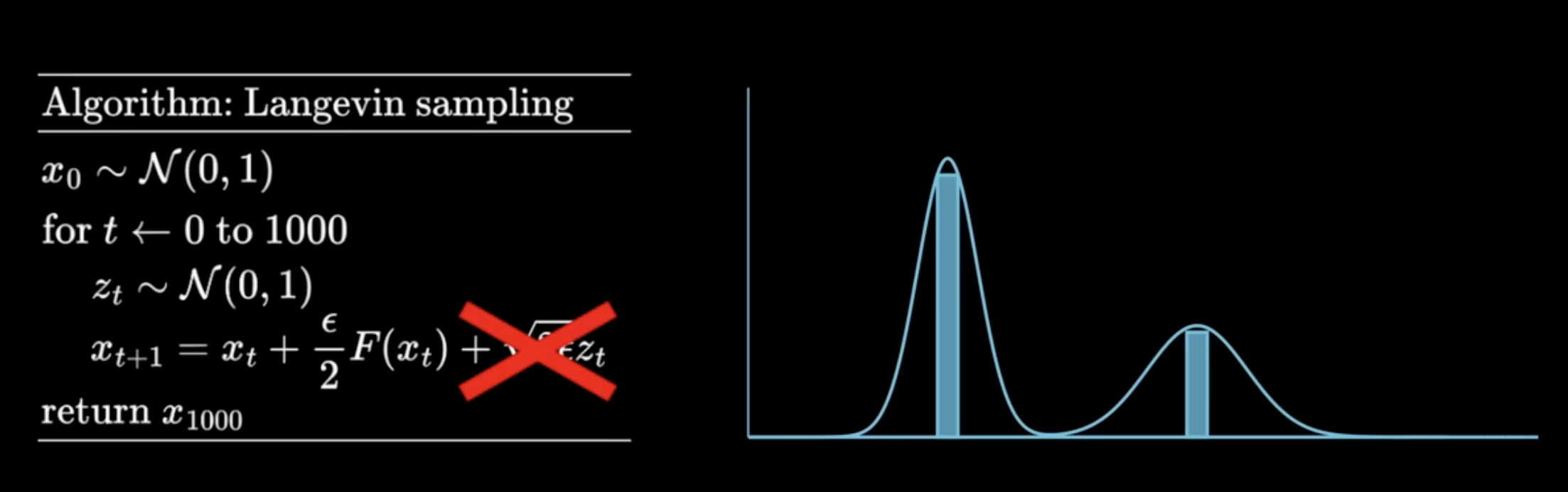
To sample from a distribution w known pdf, we can use following algorithm:
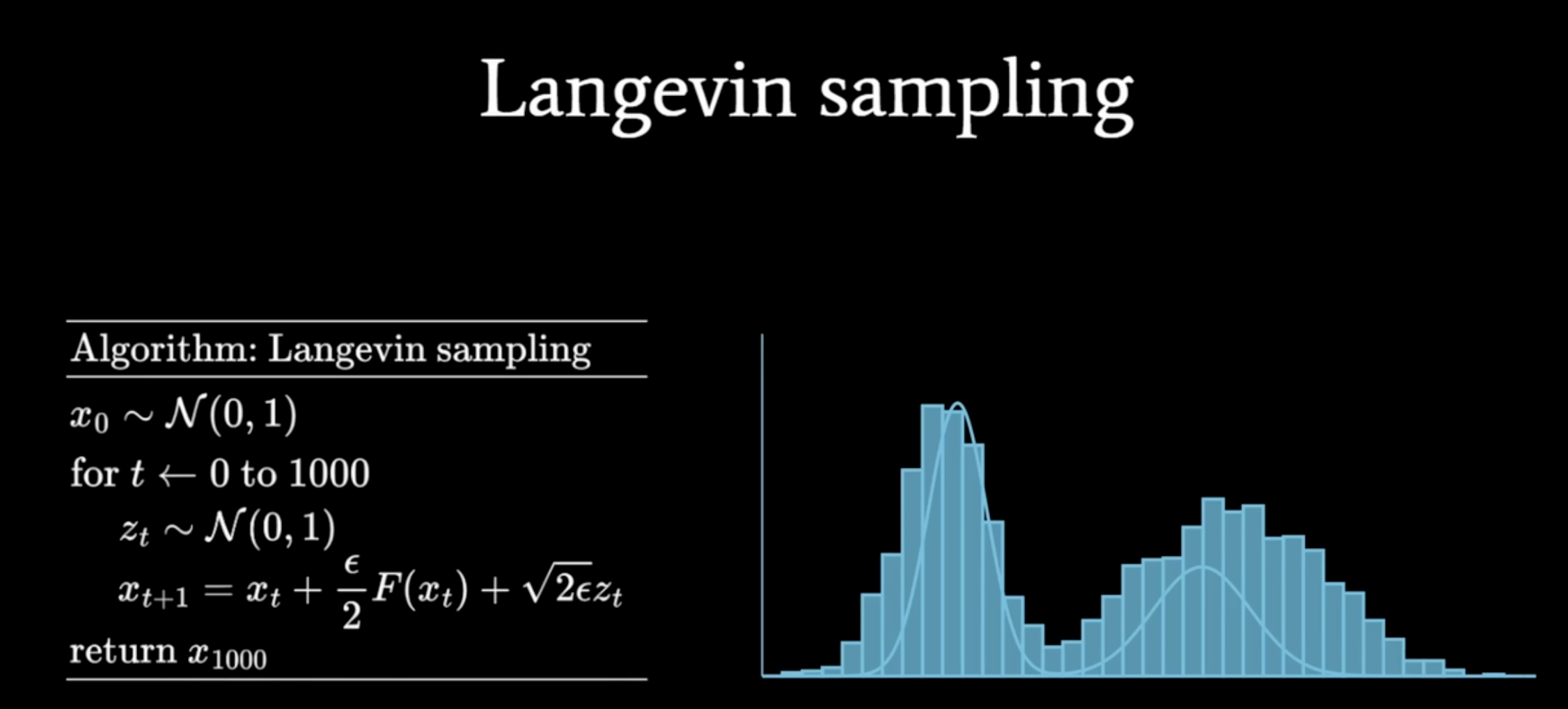 where $F(x)=\nabla_x\log(p(x))$, is just the score function
Here is the sample code of running Langevin Sampling on a uniform distribution over dice rolling
Here are 2 things to notice
where $F(x)=\nabla_x\log(p(x))$, is just the score function
Here is the sample code of running Langevin Sampling on a uniform distribution over dice rolling
Here are 2 things to notice
- Why we need the log? It can make sure converge fast, especially when p(x) is small
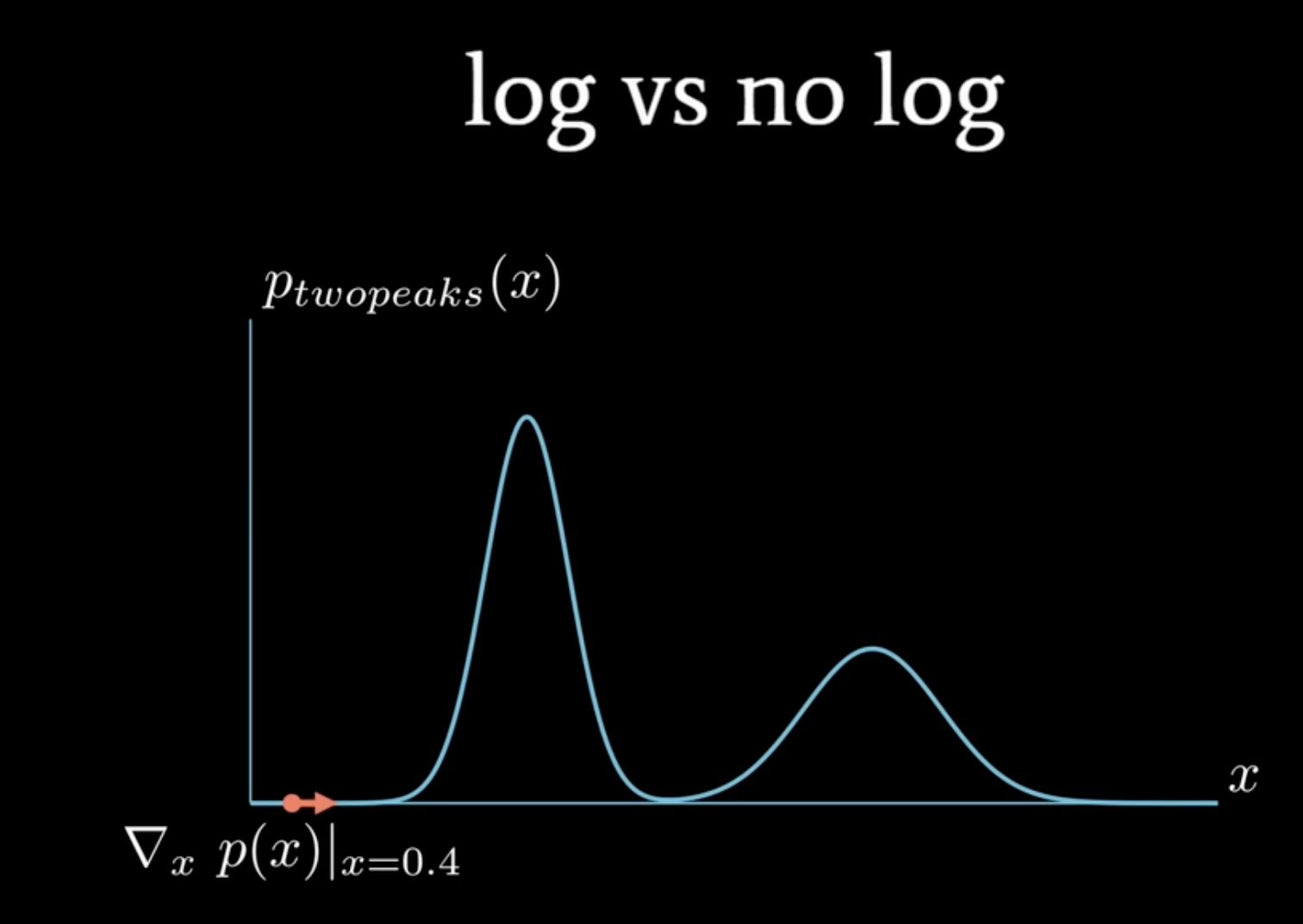 \(F(x)= \frac{d}{dx}\log(p(x)) \\
=\frac{p(x)}{p(x)} \\
=\frac{\nabla_xp(x)}{p(x)}\)
\(F(x)= \frac{d}{dx}\log(p(x)) \\
=\frac{p(x)}{p(x)} \\
=\frac{\nabla_xp(x)}{p(x)}\) - The noise term is to make sure we are getting a distribution, rather than focused on highest percentage points.
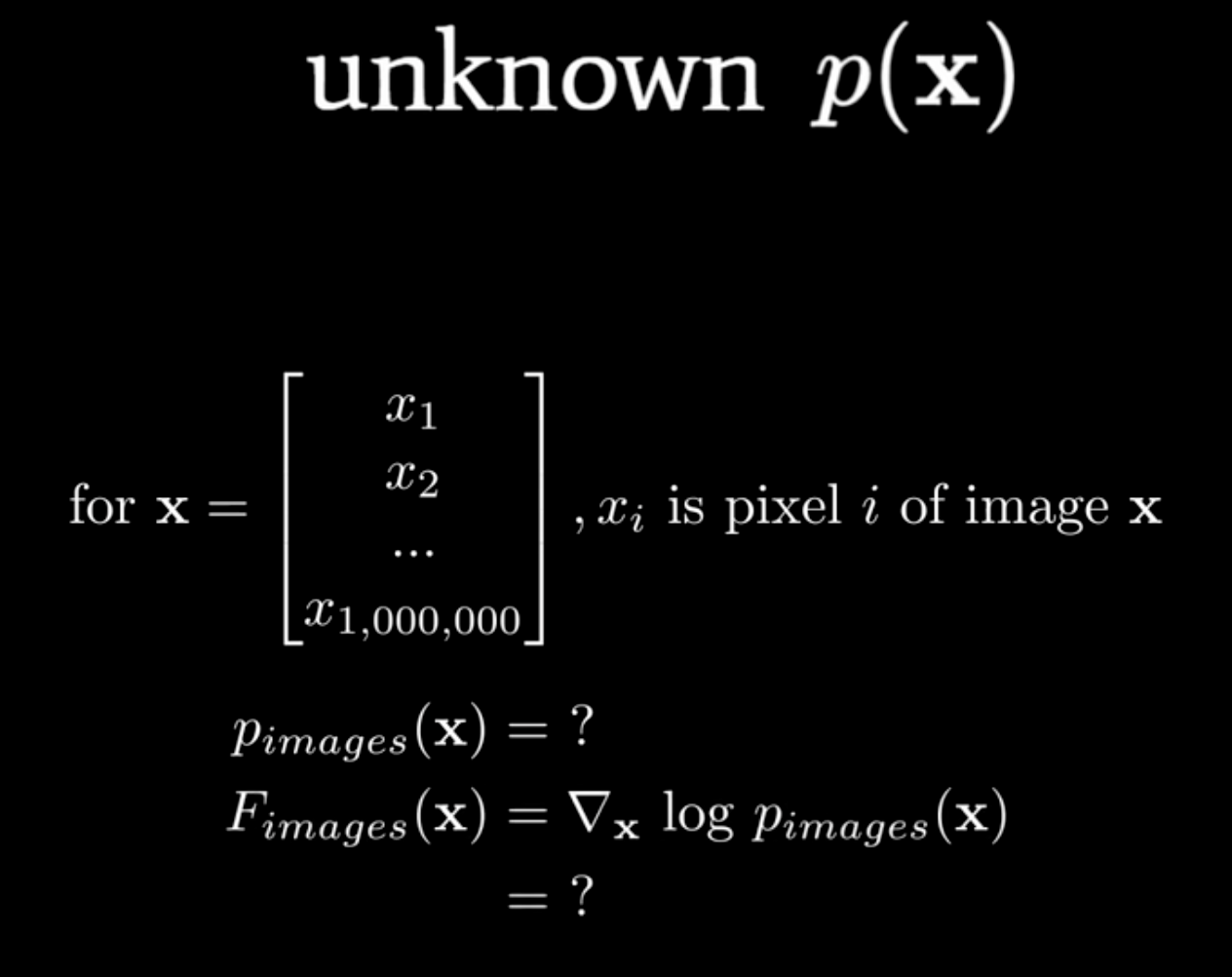
 What if the PDF is unknown? That’s where DL comes to the rescue
2 Image Generation
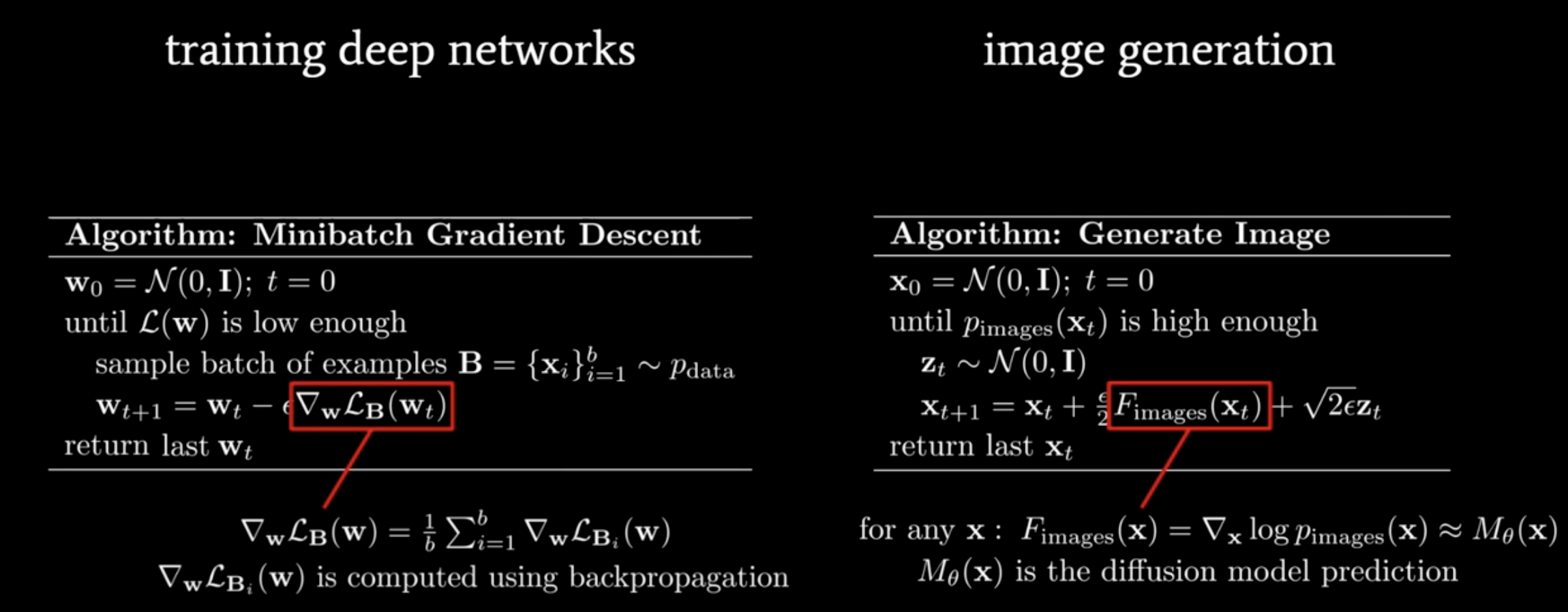
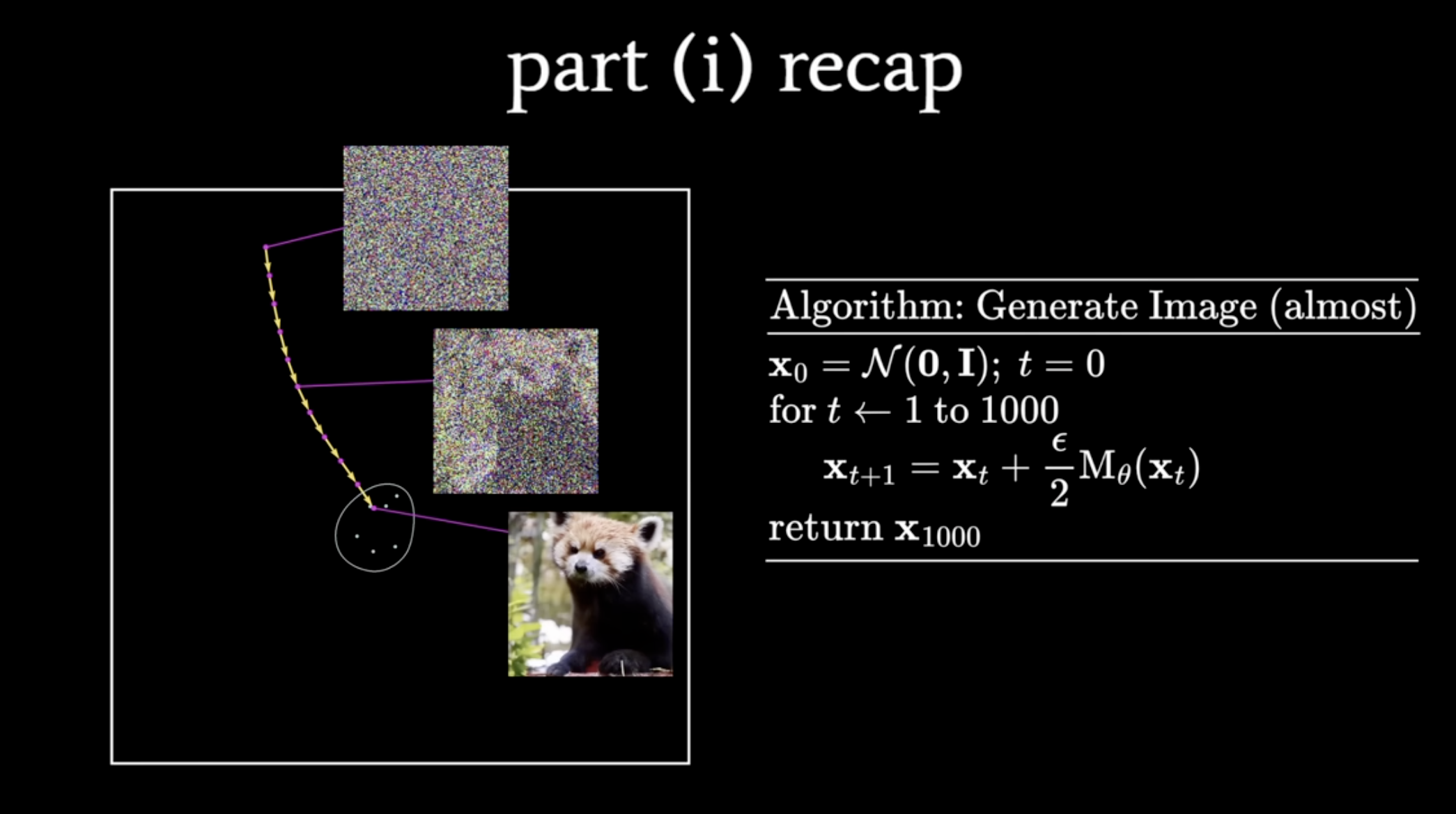
Recap this youtubers’ first video on diffusion, the idea is very straightforward.
- Diffusion process is highly similar to ML training process

- Predicting noise, is actually finding the direction to the valid image cluster in the image space
 The noise is playing a critical role in the diffusion models in following ways
- Diffusion process is highly similar to ML training process
- As we shown above, ensure diversity. and also avoid local optima, anohter ML similarity
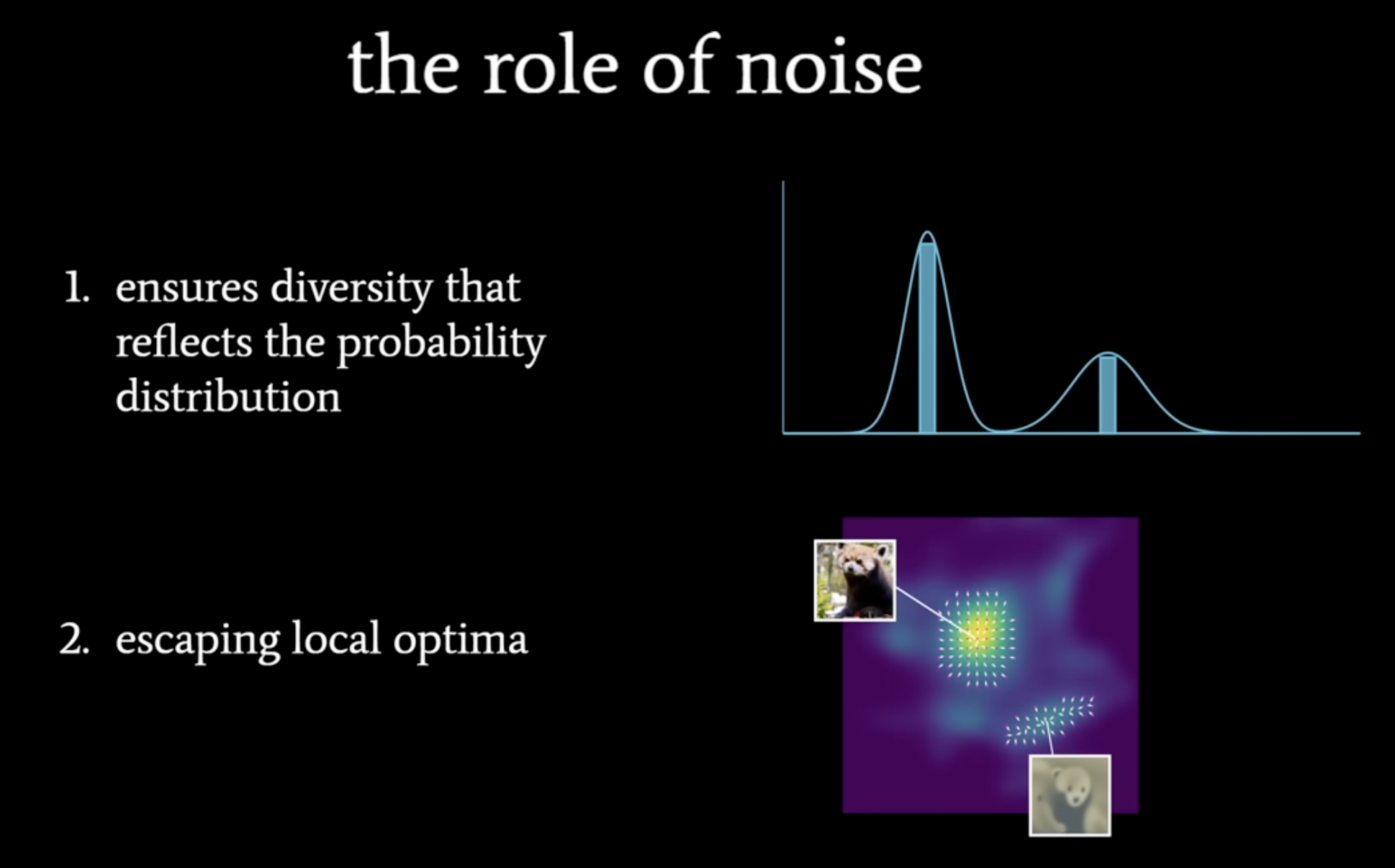
- If we remove the noise, you will see the blurr image. which is explained in previous blog
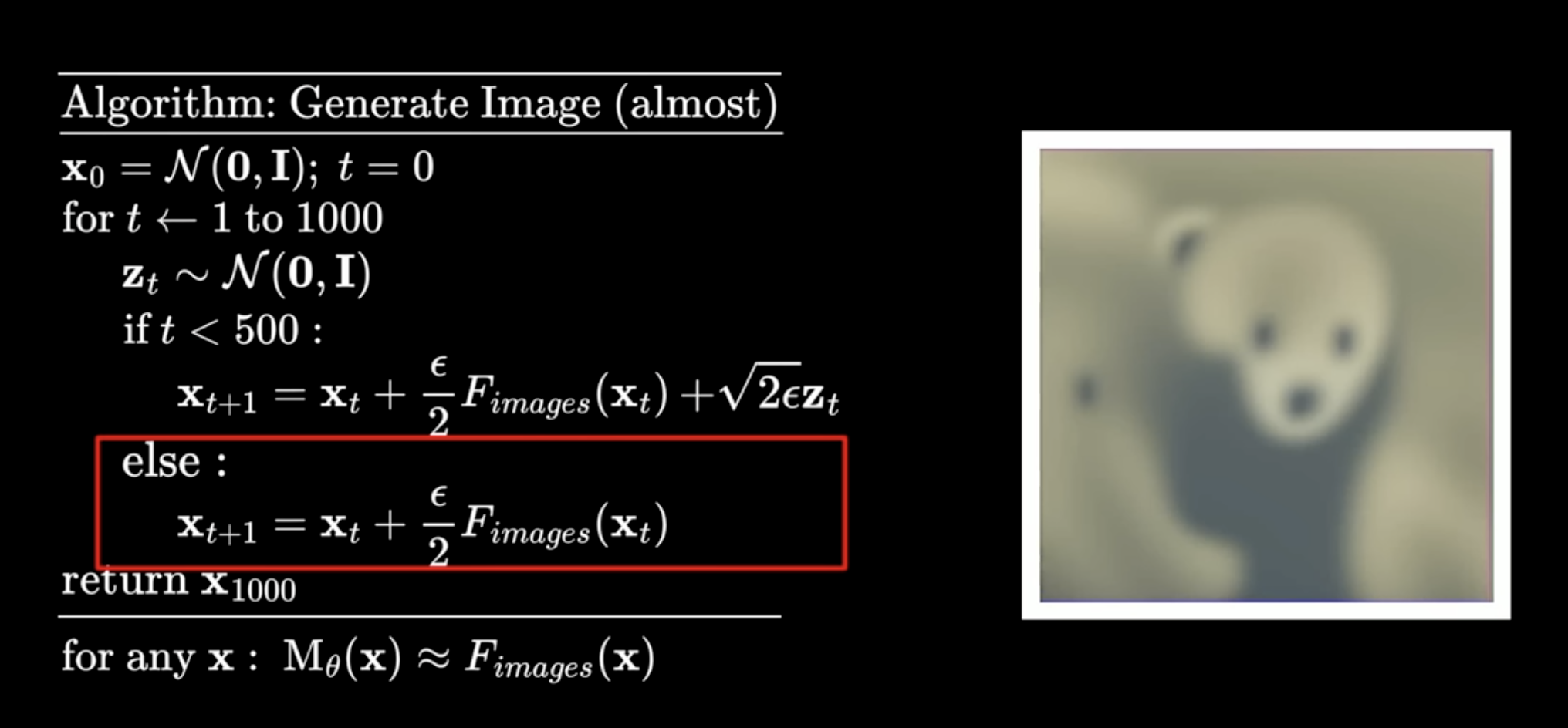
- The diffusion is for “logical” part, and noise is for creativity
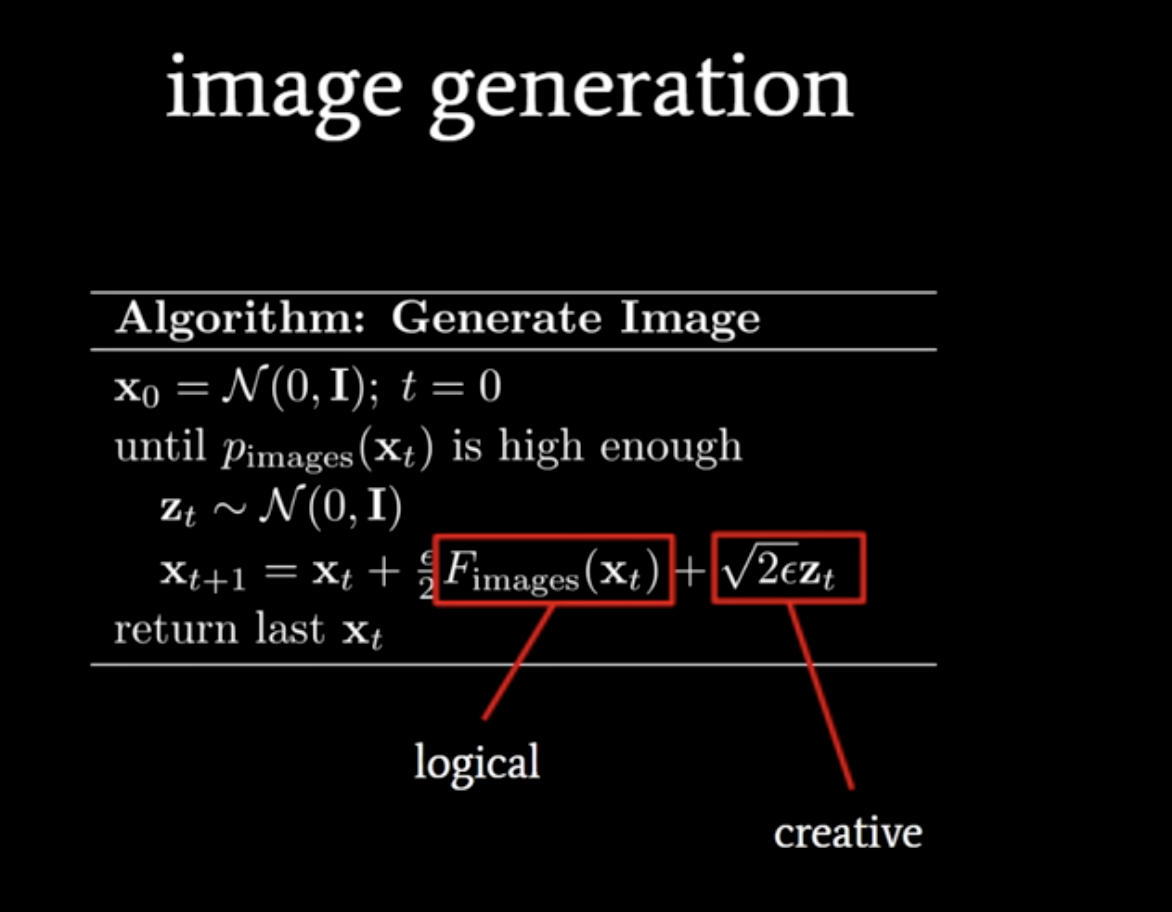 So now you will see diffusion is essencially same as finding the weight in DL training